Moldova October 2025
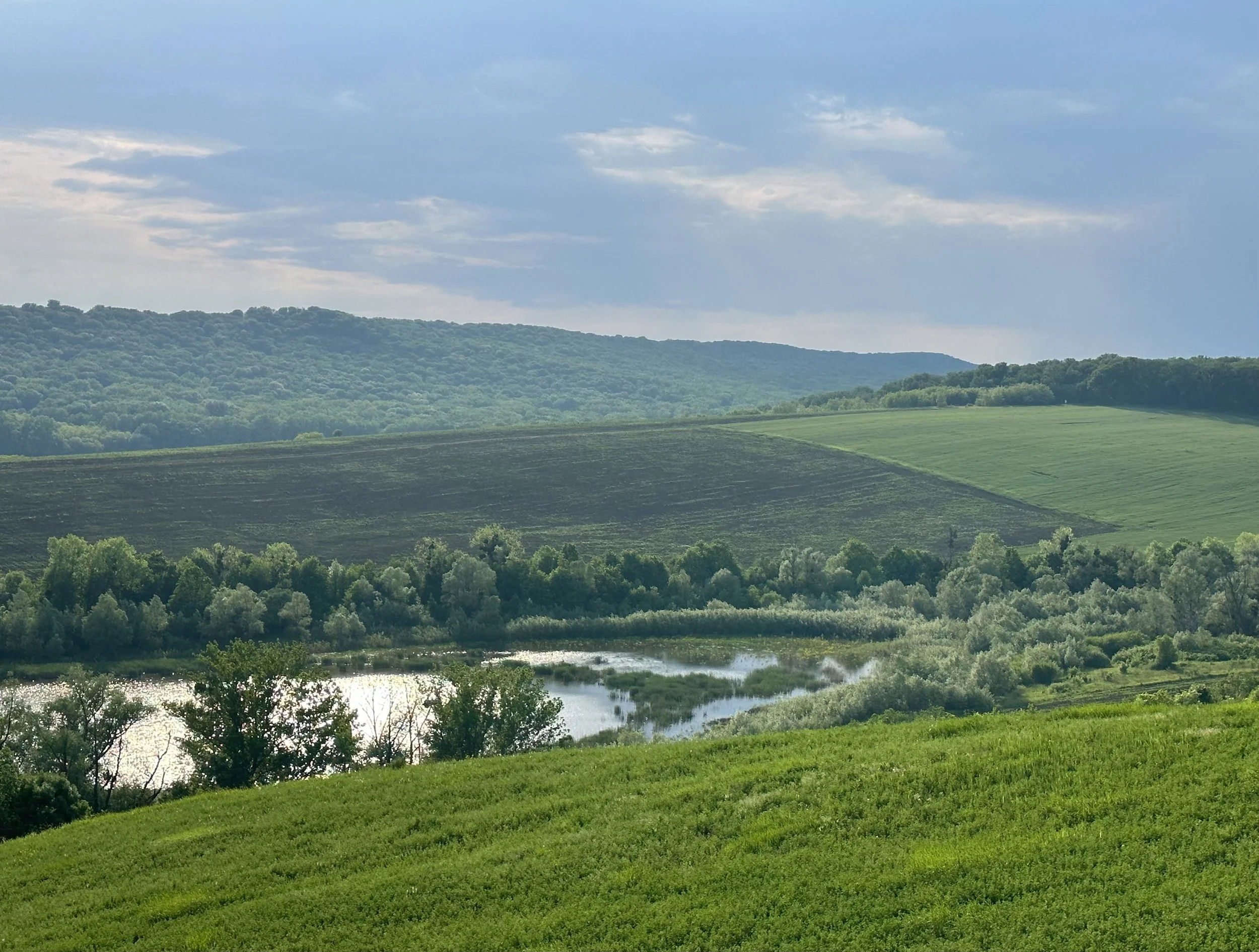
It’s been a bit since I’ve posted, between priorities closer to home and a broken leg, my travel needed it’s own break. We did squeeze in some time in Europe and what follows was one of the highlights.
Moldova is about about the size of Maryland with a population close to the city of Chicago proper. It is landlocked, mainly agricultural and currently the poorest country in Europe. For perspective, the GDP per capita in Moldova is two thirds that of even Albania. However, if you’ve seen anything of Albania’s capital of Tirana, the contrast to Moldova’s only major city and capital of Chisinau will give you the reverse impression. While Tirana seems cold and Soviet sterile, Chisinau is an attractive city in it’s core, with parks, monuments, and beautiful vistas. Including some great places to eat and a number of nice hotels.
Venturing further out of the city and journeying into the agricultural based countryside takes you through some handsome wine regions that you could expect to see in California.
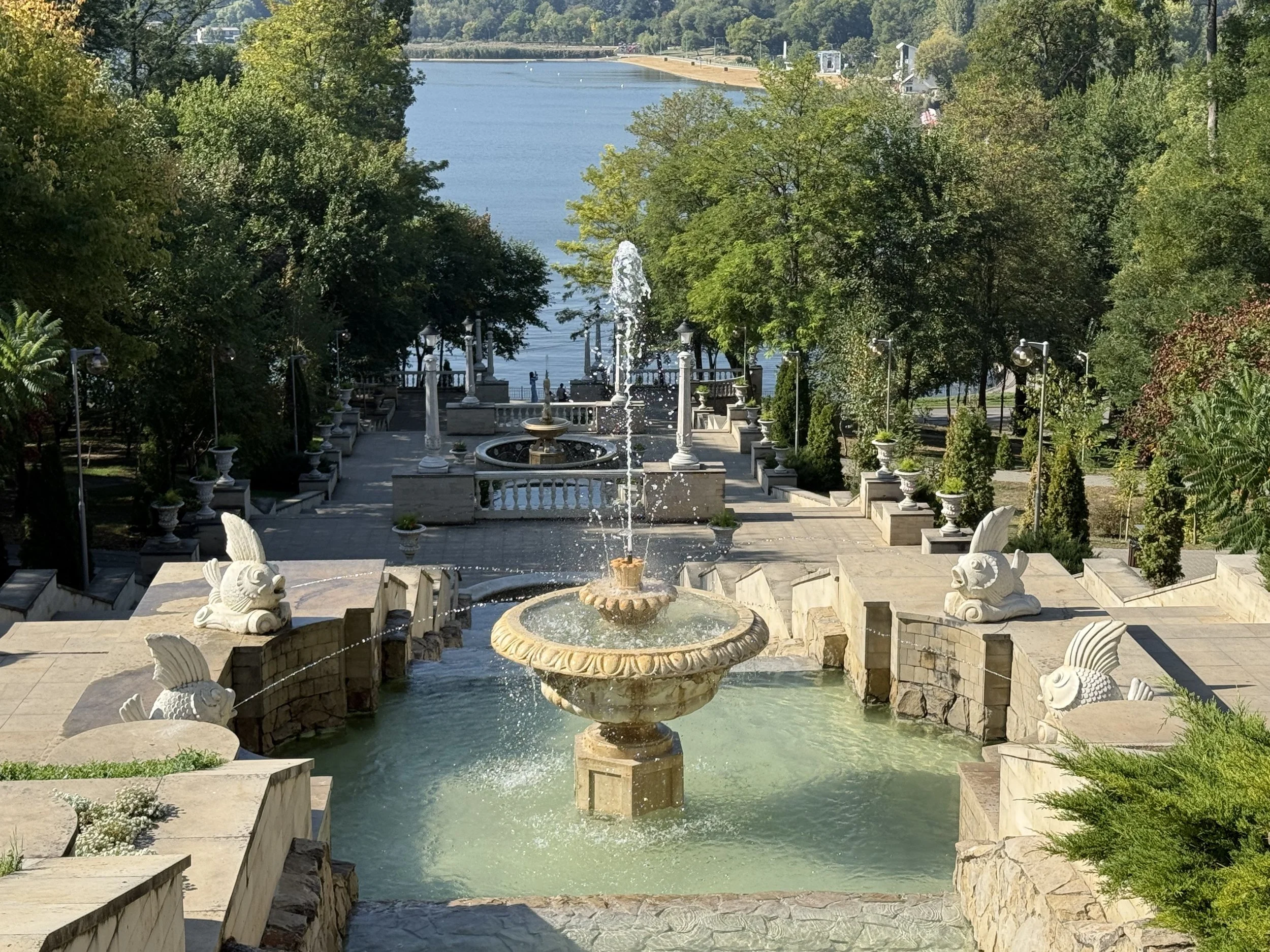
Parcul Valea Morilor. In english Mill Valley Park
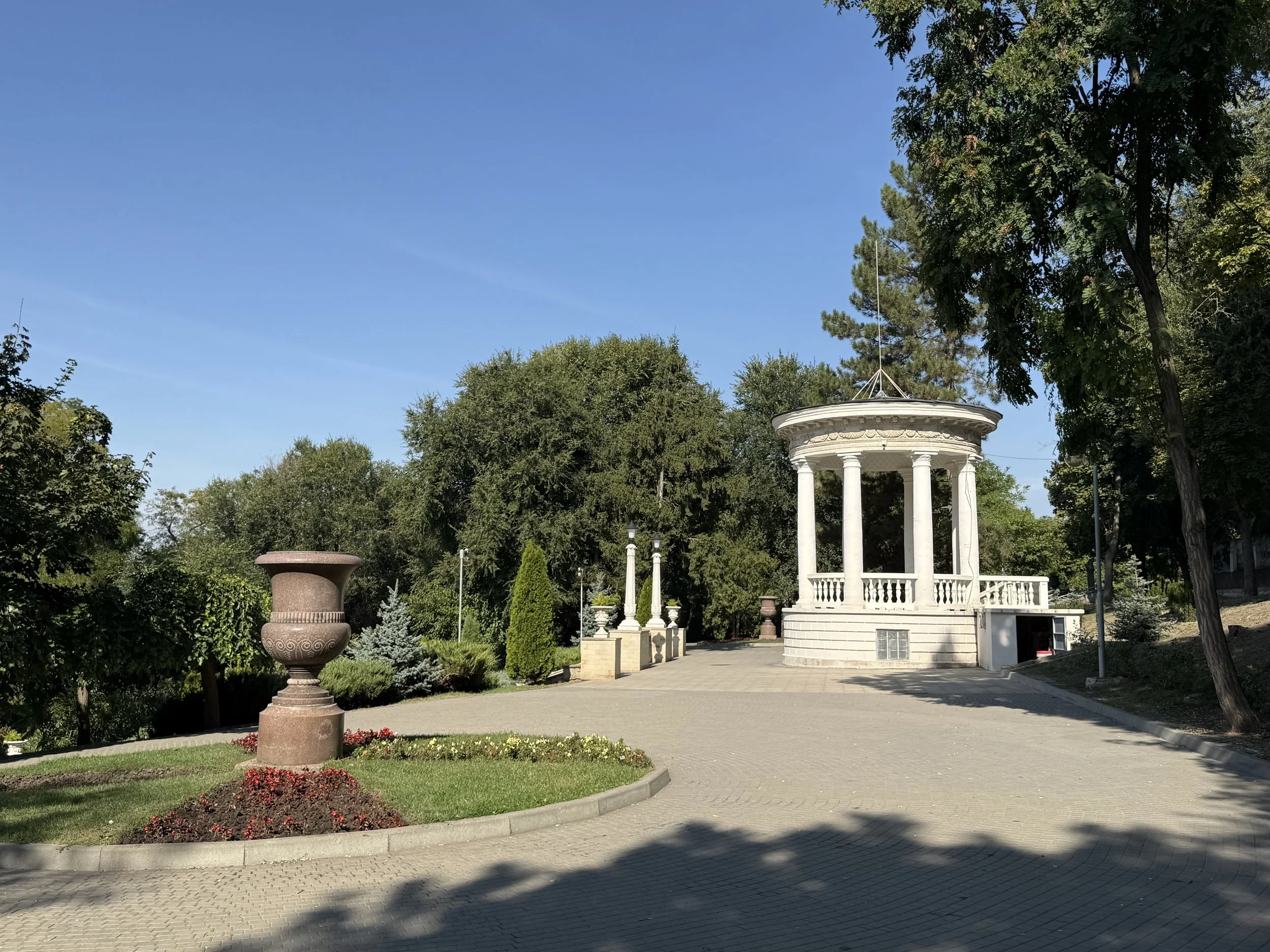
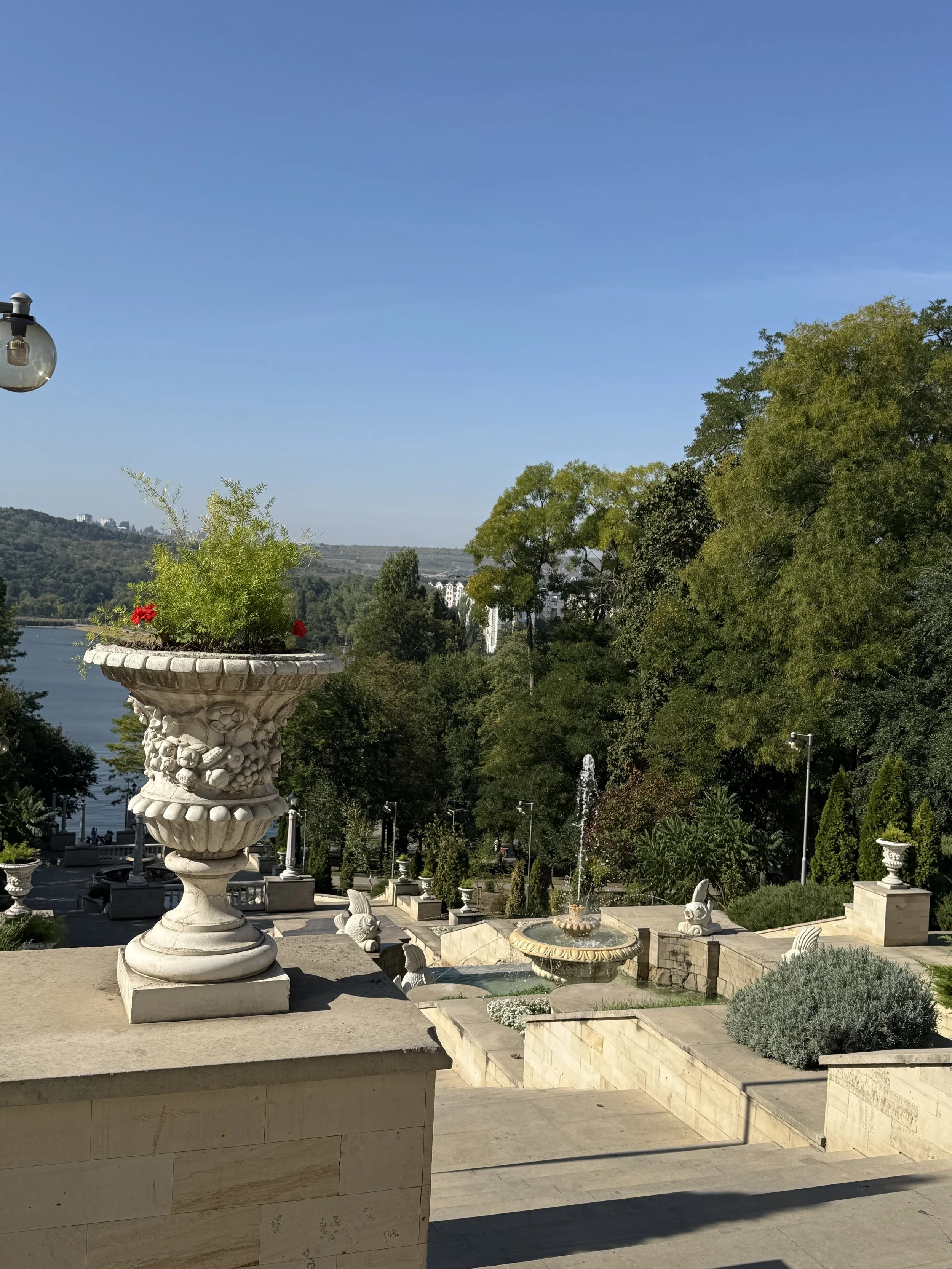
The park sits above and slopes to a large lake
I was surprised to realize that Moldova has an identity and history as an independent nation that spans centuries and exceeds that of it’s neighbors, Ukraine, Romania, and Poland to name a few. Of all the former Soviet states that spawned from the interior of the old USSR, Moldova perhaps had the greatest national legacy.
For much of it’s history however it was a crossroads, a sort of passage way between East and West, changing hands often and hosting battles in the process. Romans, Huns, Goths, Mongols, all had their period of residence and then pushed on by. During it’s greatest era in the late 1400’s, the country was ruled by Stephen the Great. You probably heard of his cousin, the infamous Vlad the Impaler, aka Dracula. Back then, this land was known as Moldavia, and it was a bit larger than the modern state with a footprint that included all of Bessarabia (today situated in eastern Romania and into part of Ukraine).
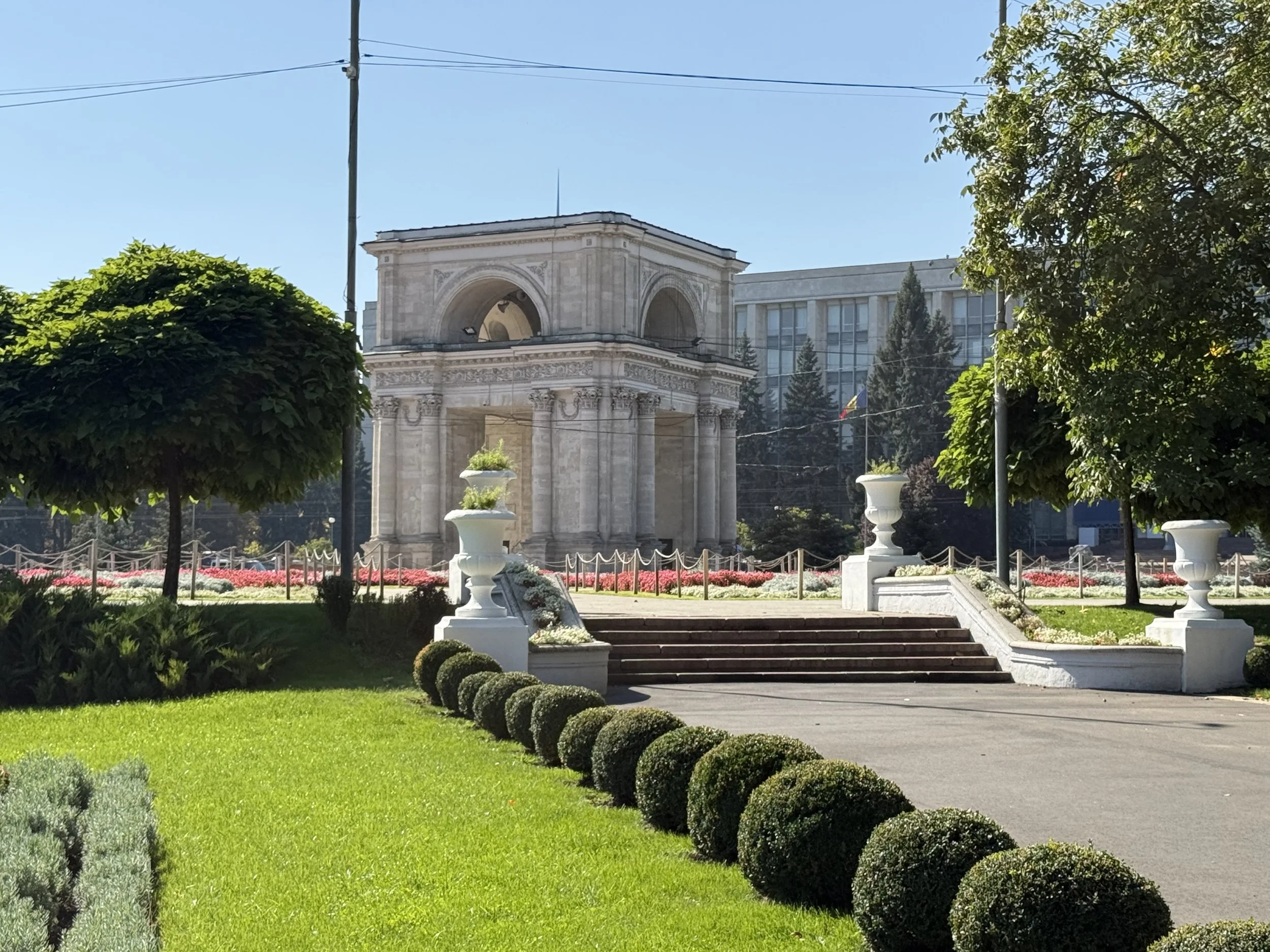
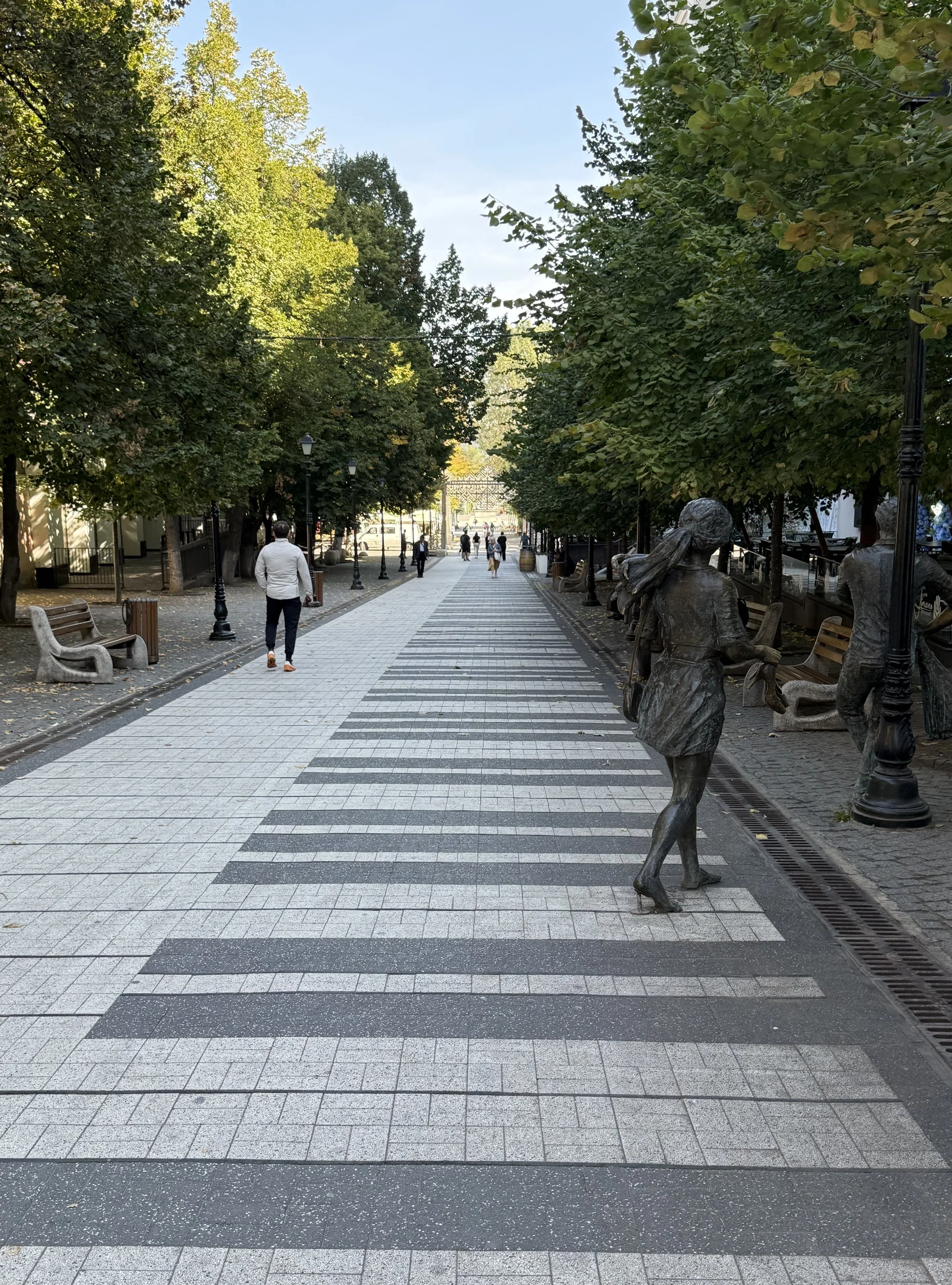
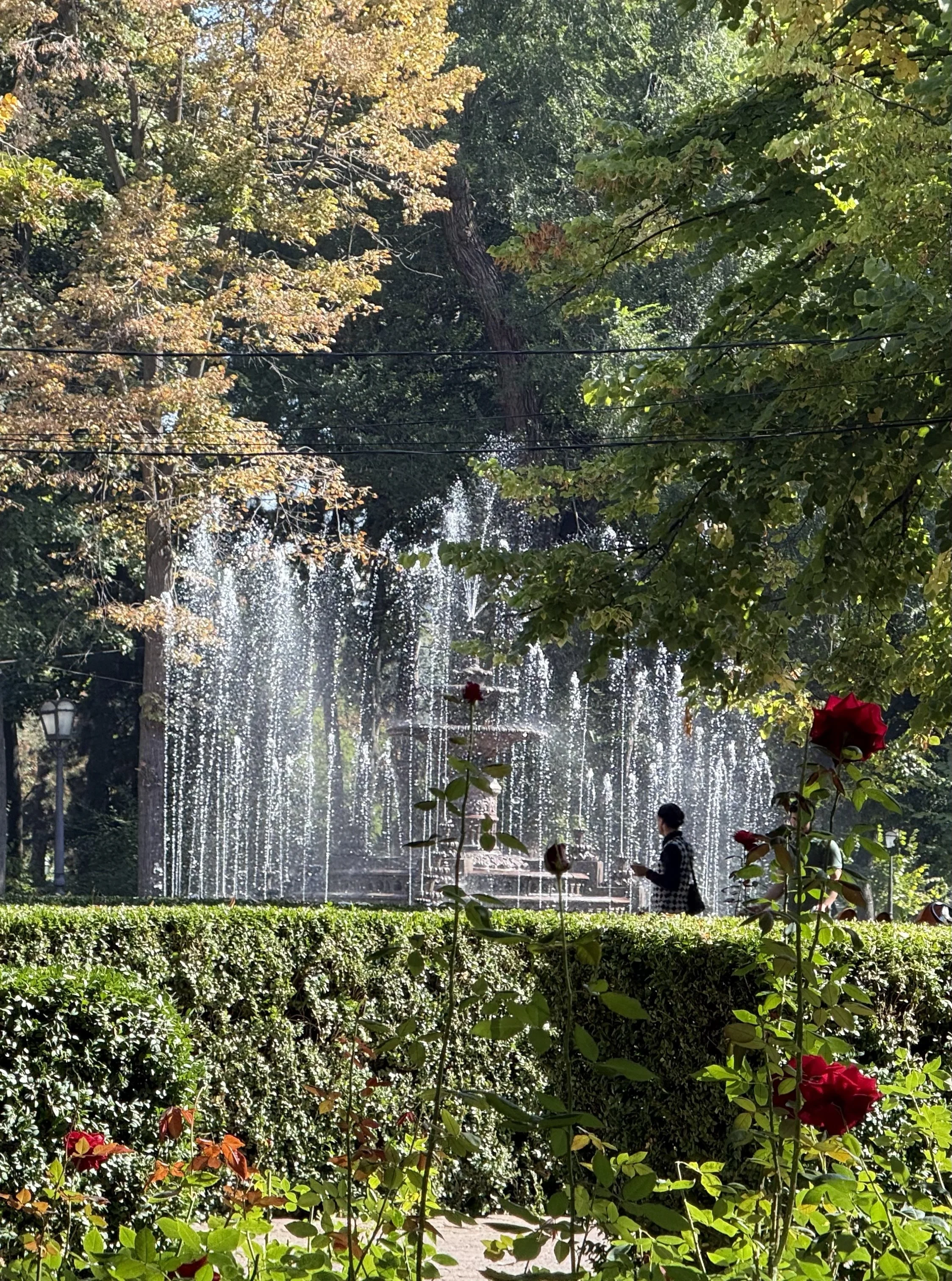
Its a great walk from Valea Morilor through the city center
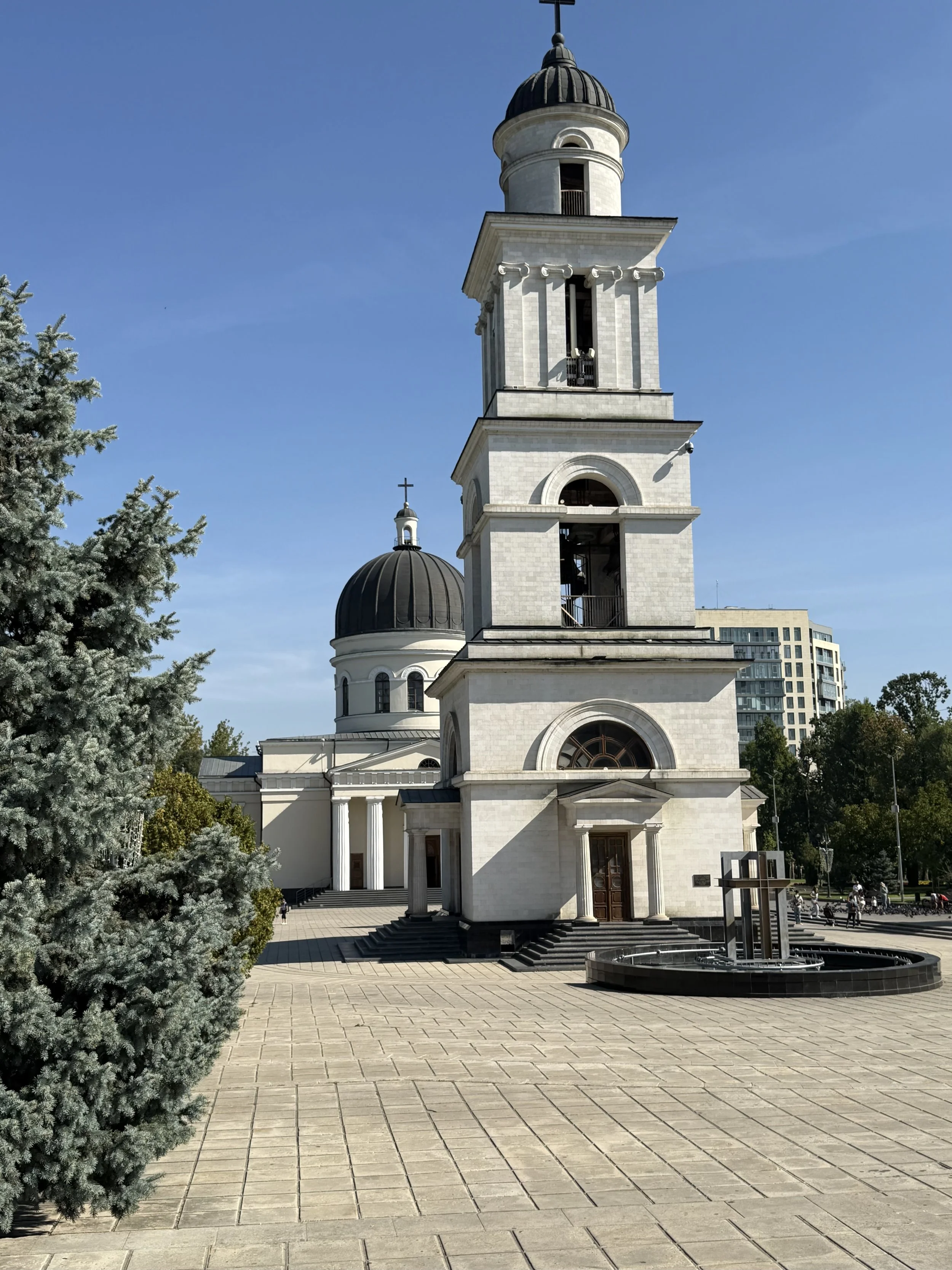
Nativity Cathedral
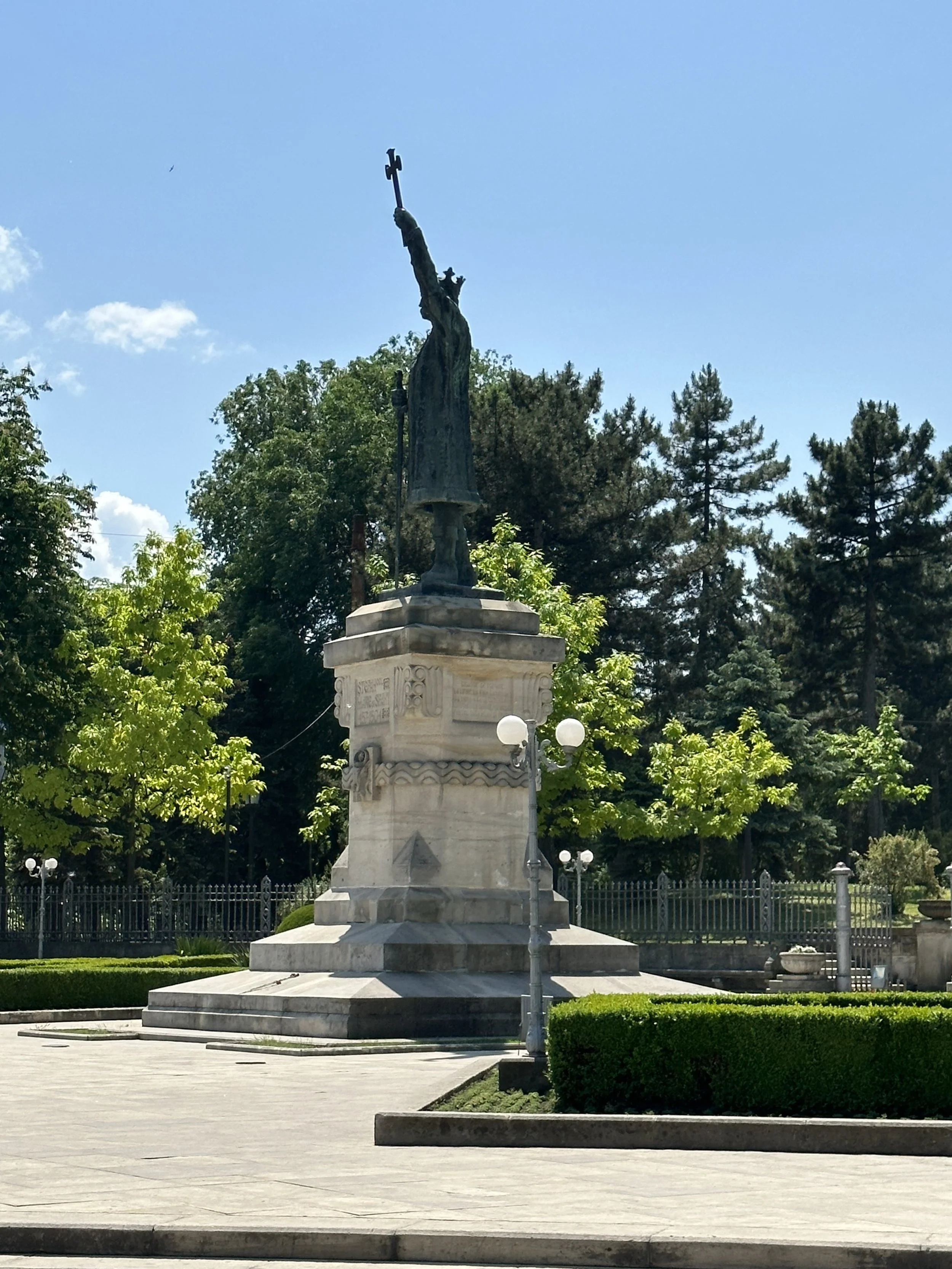
Monument to Stephen the Great
Stephan was that historical combination of a great general and a great diplomat. Respected and admired by friend and foe, he successfully and repeatedly defeated armies from Poland, Walachia and the Ottoman Empire. When the odds against him were overwhelming he used diplomacy to allow Moldavia to continue it’s independence and gain prosperity. After his death Ottoman influence gradually gained power over the smaller state and although it maintained it’s independence, Moldavia would become little more than a satellite of the Ottoman empire. In the mid 1800’s as the Turks weakened, repeated revolutions allowed Walachia and Moldavia to unite as the core of the new Romania.
Not for long, in less than a century the eastern part of Romania was a target for conquest by Stalin’s Soviet Union, forcing Romania to cede a large area including what now constitutes Moldova. Then after Germany’s defeat in WWII, the former Axis ally Romania, in its entirety became part of the Soviet Eastern Bloc. All of what is now Moldova was returned to the Soviets becoming one of the SSR’s inside the Soviet nation, like Ukraine. This all changed of course when the Soviet Union fell in 1991. Romania became independent once more, and since Moldova was separated from Romania as one the SSR’s it somehow managed to be restored as its own nation.
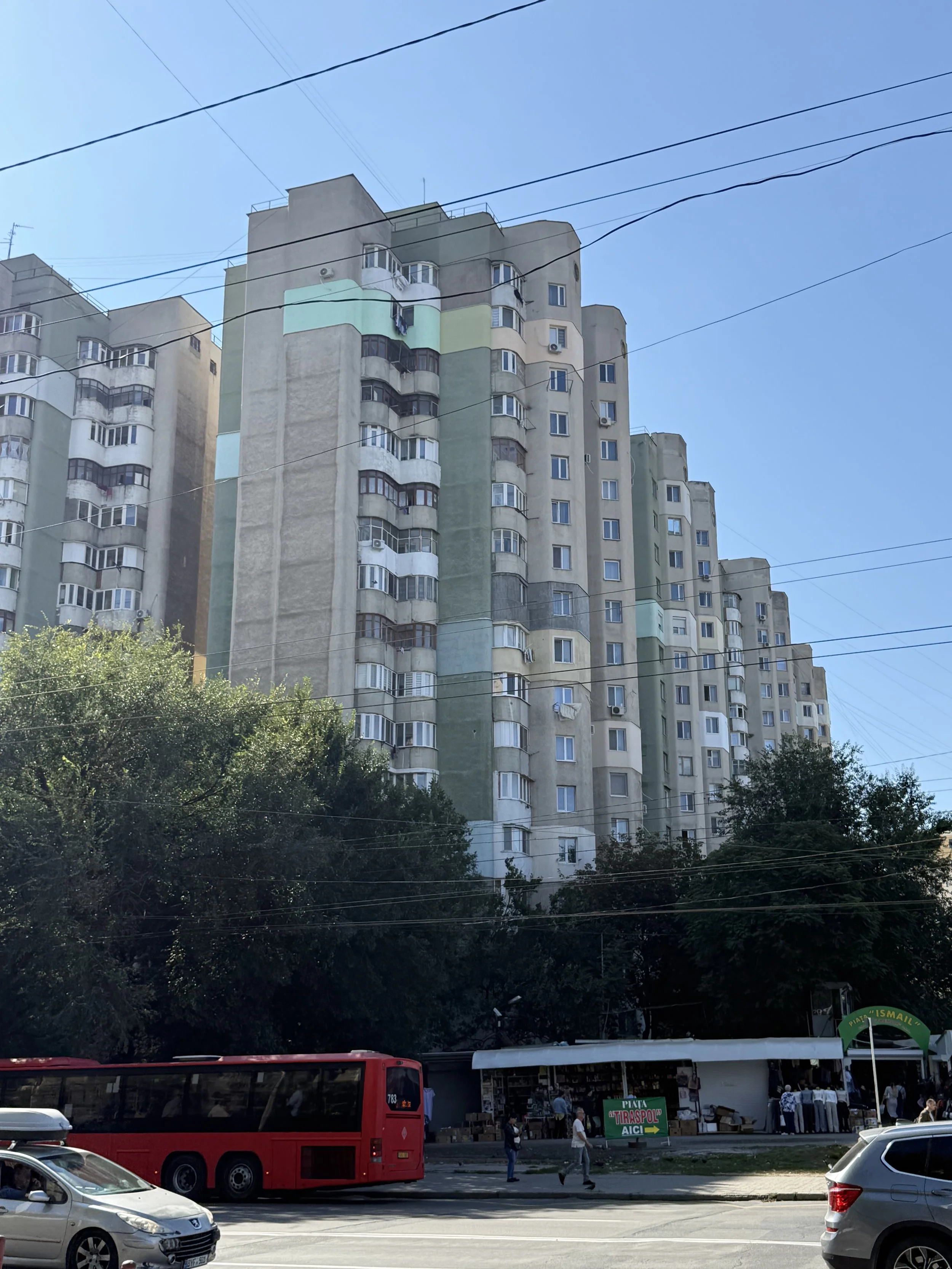
Older simple Soviet architecture
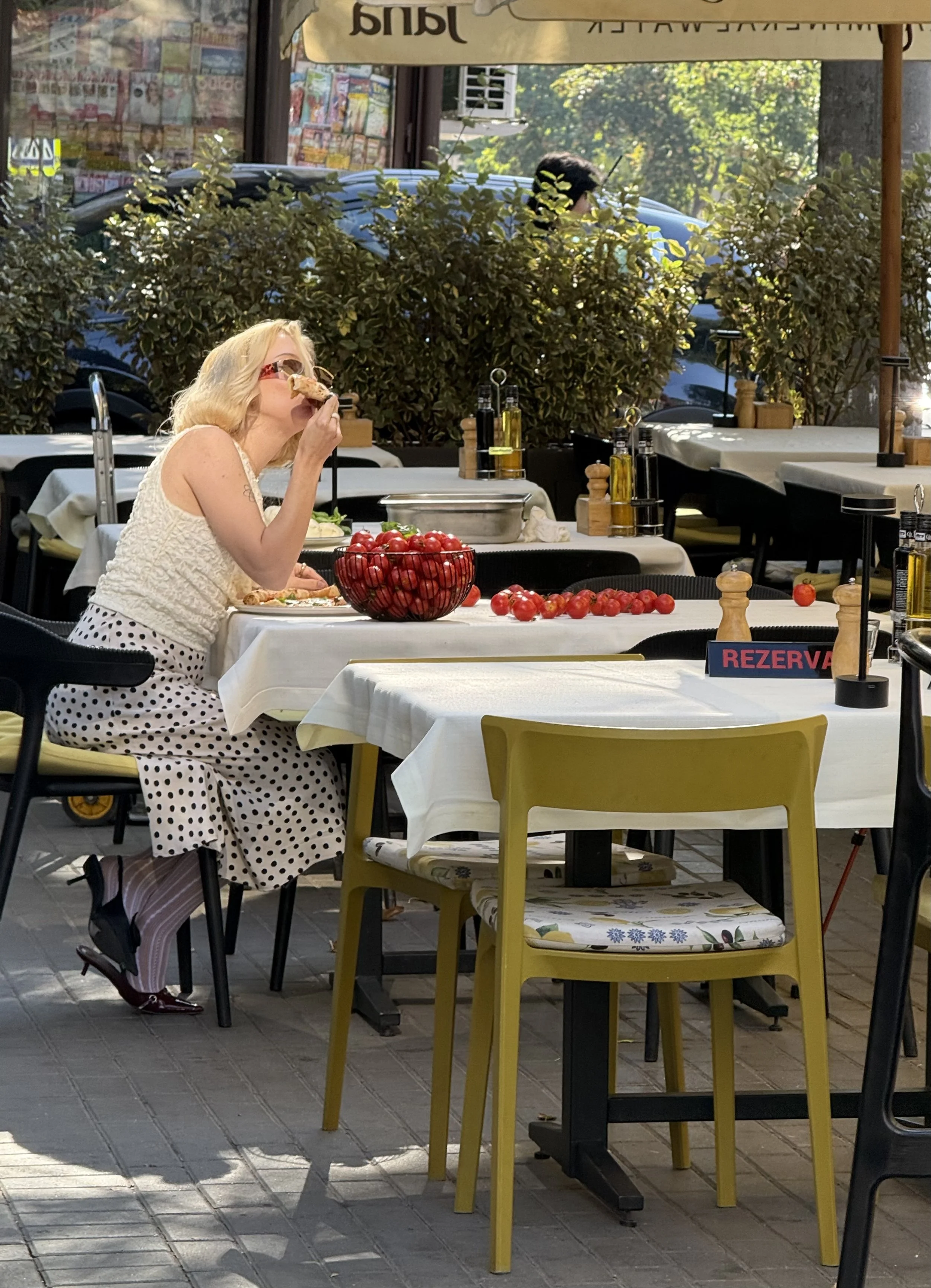
She’s not a glutton, she’s posing for a photo shoot
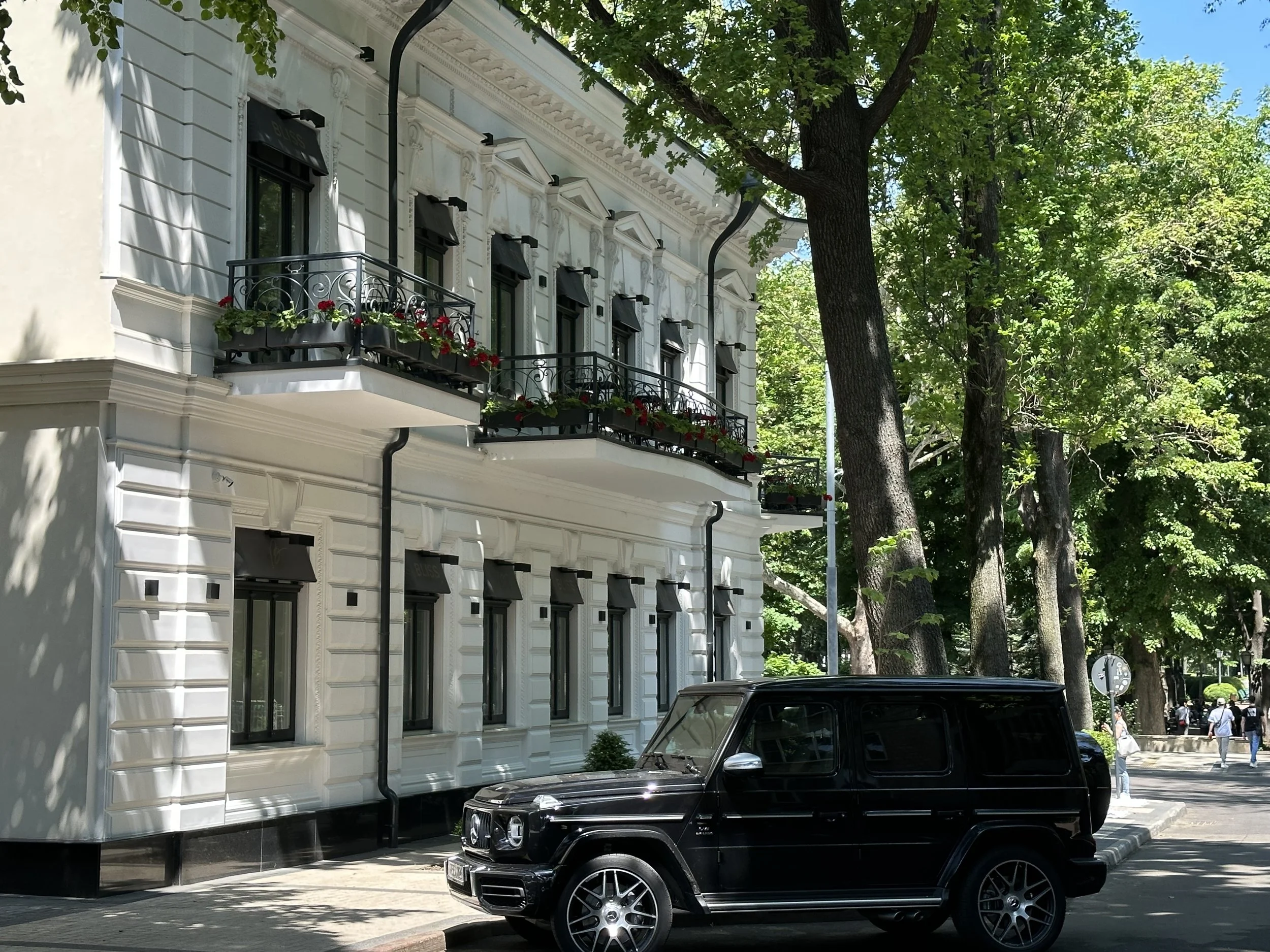
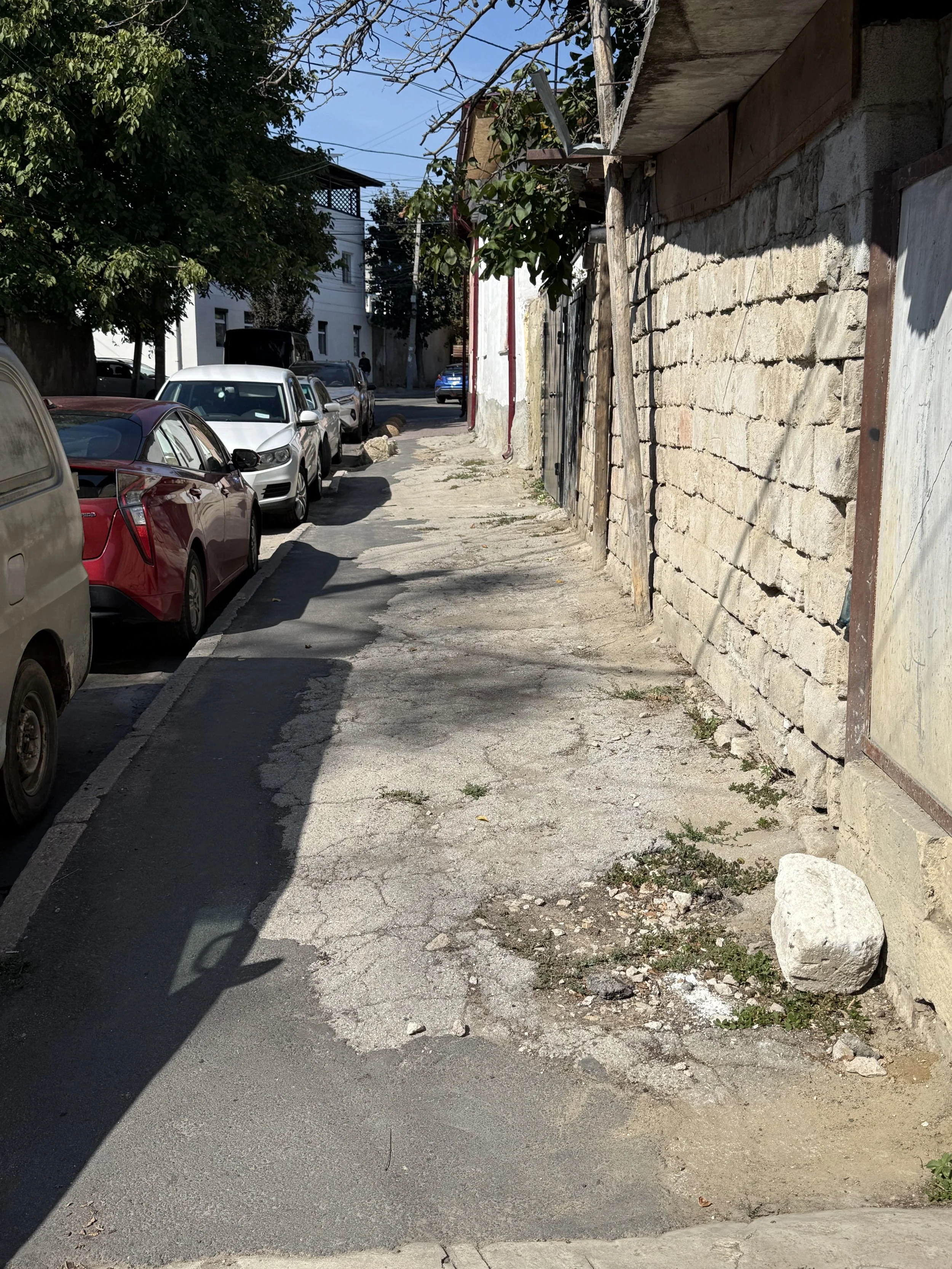
The sidewalks off the main paths can be treacherous
Loyalties have been somewhat split in Moldova ever since. A part of the population desires to be part of the EU while another faction identifies with Russia and the old Soviet Union. The former carries sway, but there is a small breakaway section of the country called Transnistria that is closely allied with Russia. This sliver of land along the Dniester river is wedged between Ukraine and Moldova. Certainly if Ukraine ever fell to Russian invasion Transnistria would go with it: but what would become of Moldova? Only EU or NATO membership would likely save it, and for now it sits precariously alone.
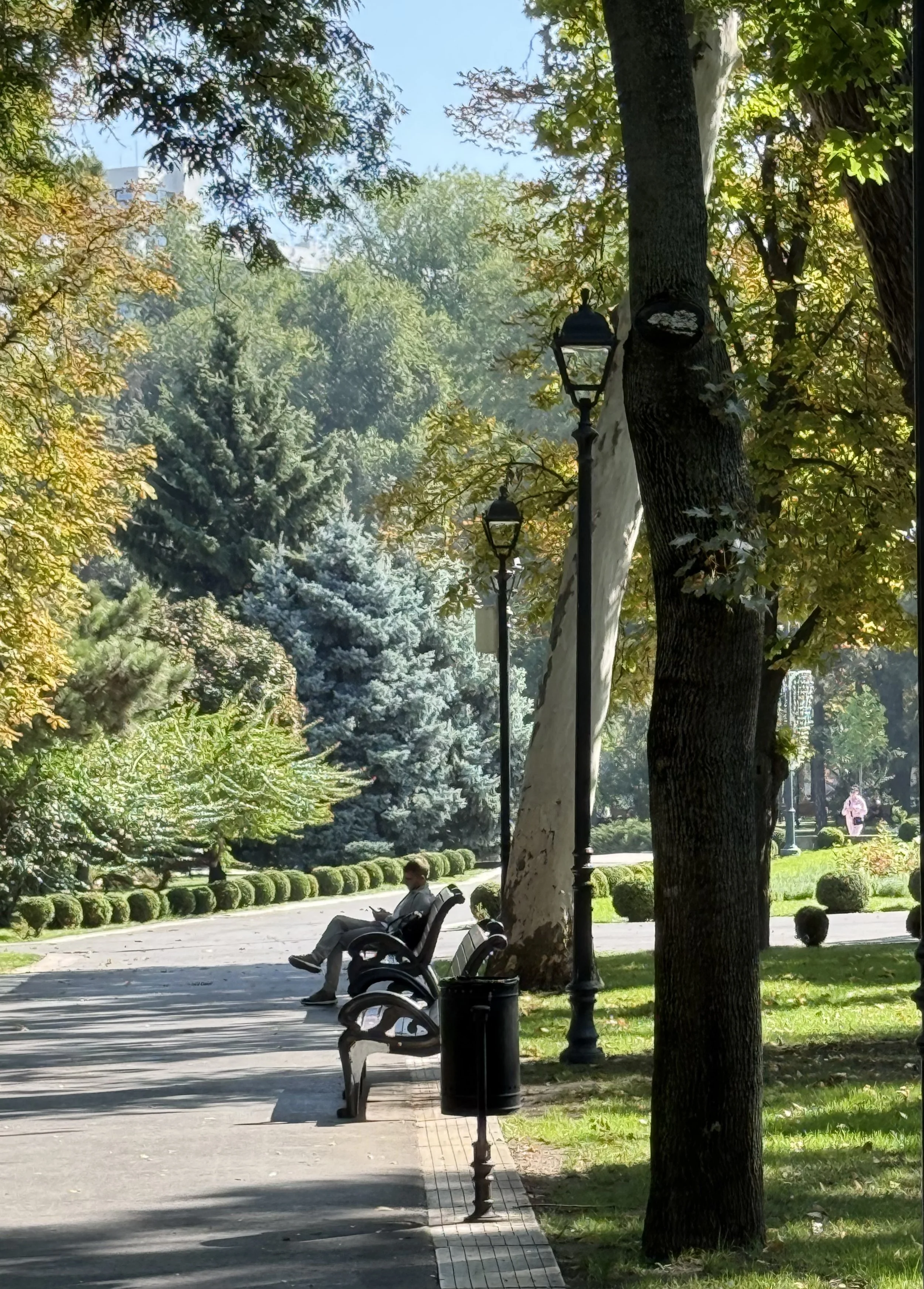
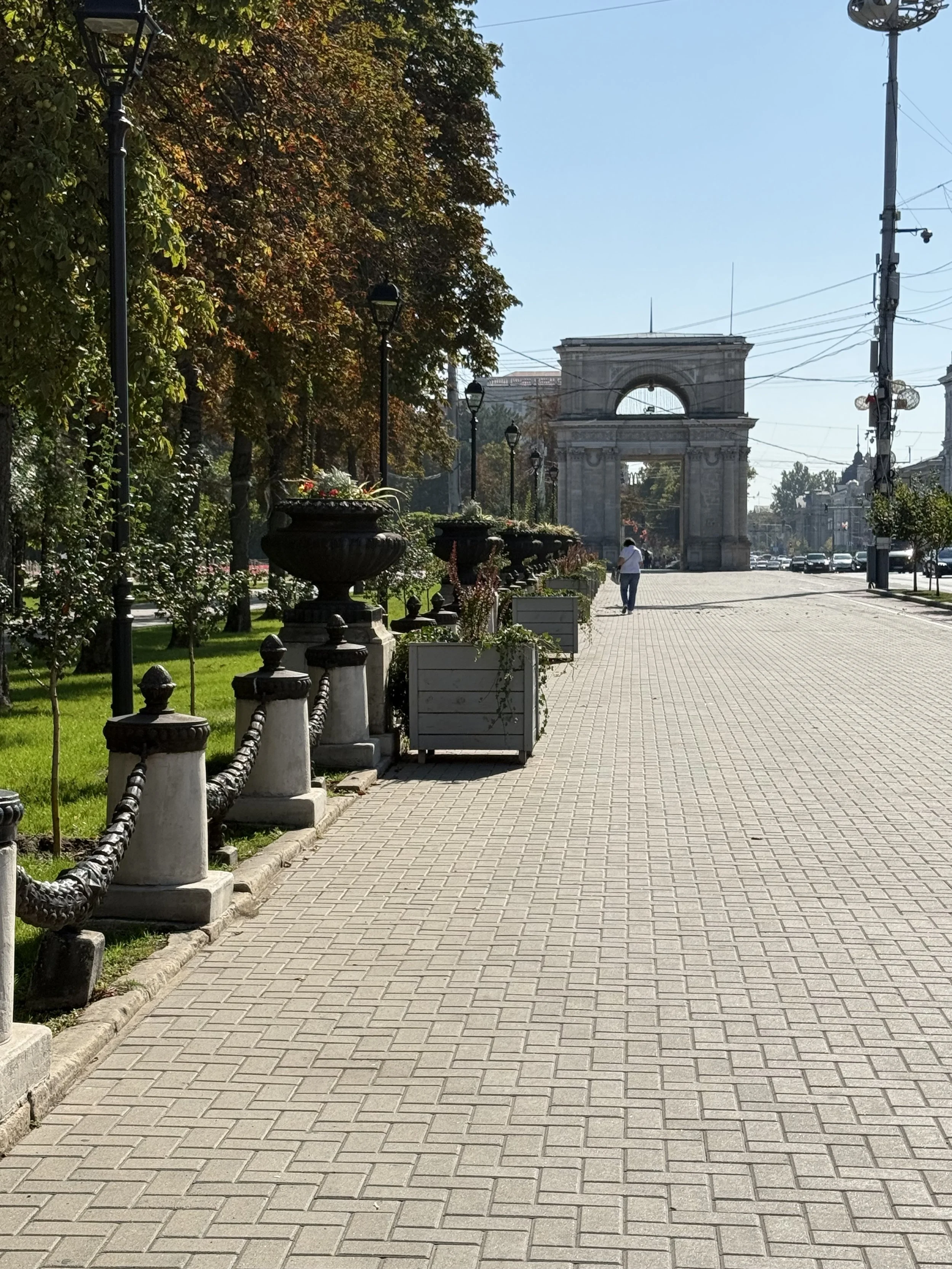
An alternative that just recently gained some support was for Moldova to join the Romanian nation. A clever fast path to get into the West, and perhaps somehow keep some shred of it’s independence as an autonomous province. After all, they do share language, core religions, and both have similar cultures.
Otherwise, the EU moves slowly under its bureaucratic weight, and there is legitimate fear that by the time they get around to accepting Moldova’s application, it will be essentially a Russian province again. Which might make some people happy but from what I know is not the will of the majority of the citizens. They understandably desire their ancient independence and they certainly deserve it.
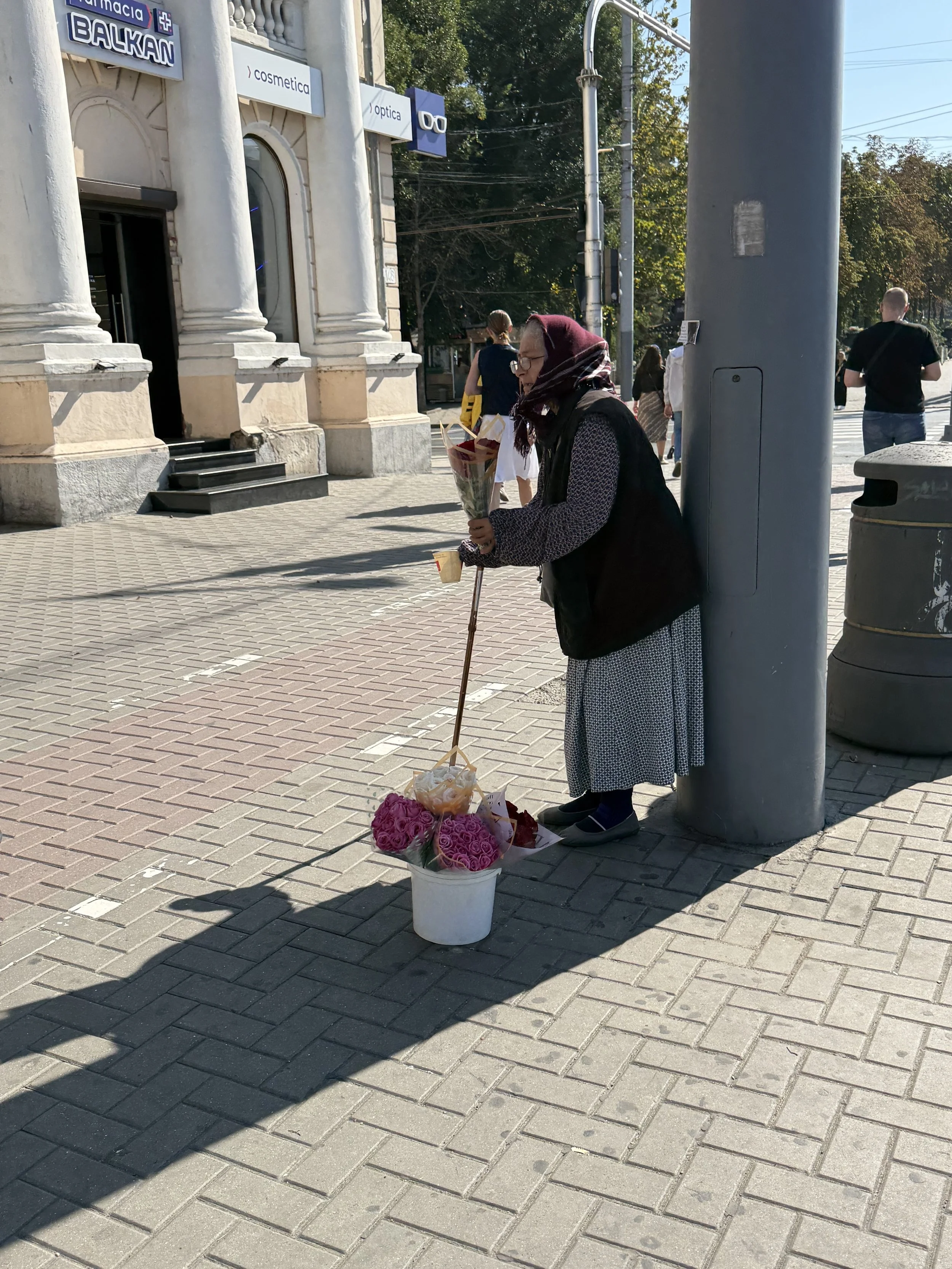
Like any city the poor are evident, but I noticed almost all were trying to make a living, not a handout
Visitors to Moldova will find it as one of those small European countries waiting to be discovered, it’s nowhere on the guidebooks and well off the web travel radar. That’s unfortunate as it could certainly benefit from some tourist cash.
Moldova might seem remote at first thought, but it’s not hard to get to by plane, it’s safe, and although it’s not developed for tourism the pieces are there. There is another important tourist draw. The wine! Moldova is home to some terrific wineries (which explains some of its appeal to Putin).
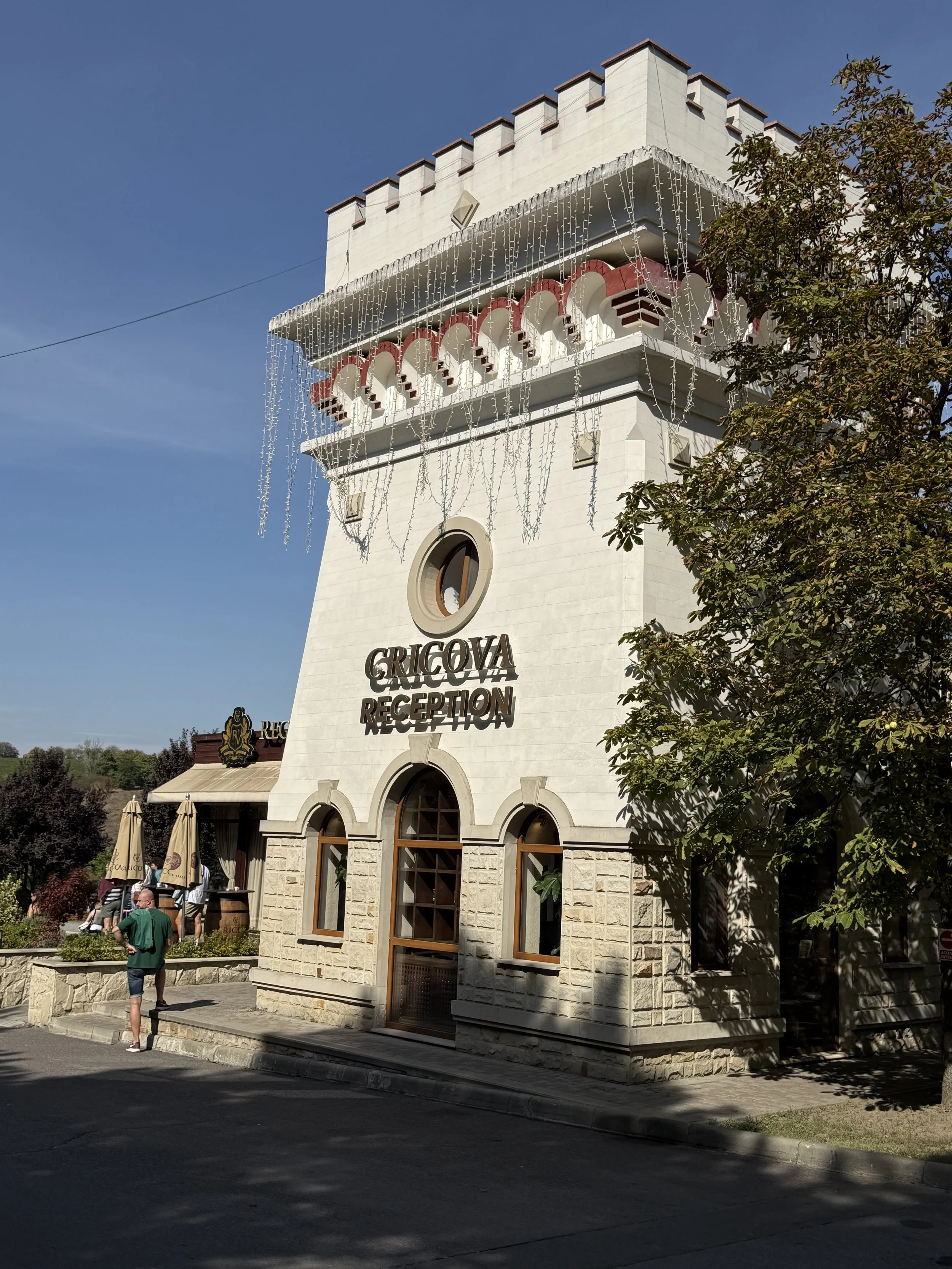
The entry to Cricova Winery
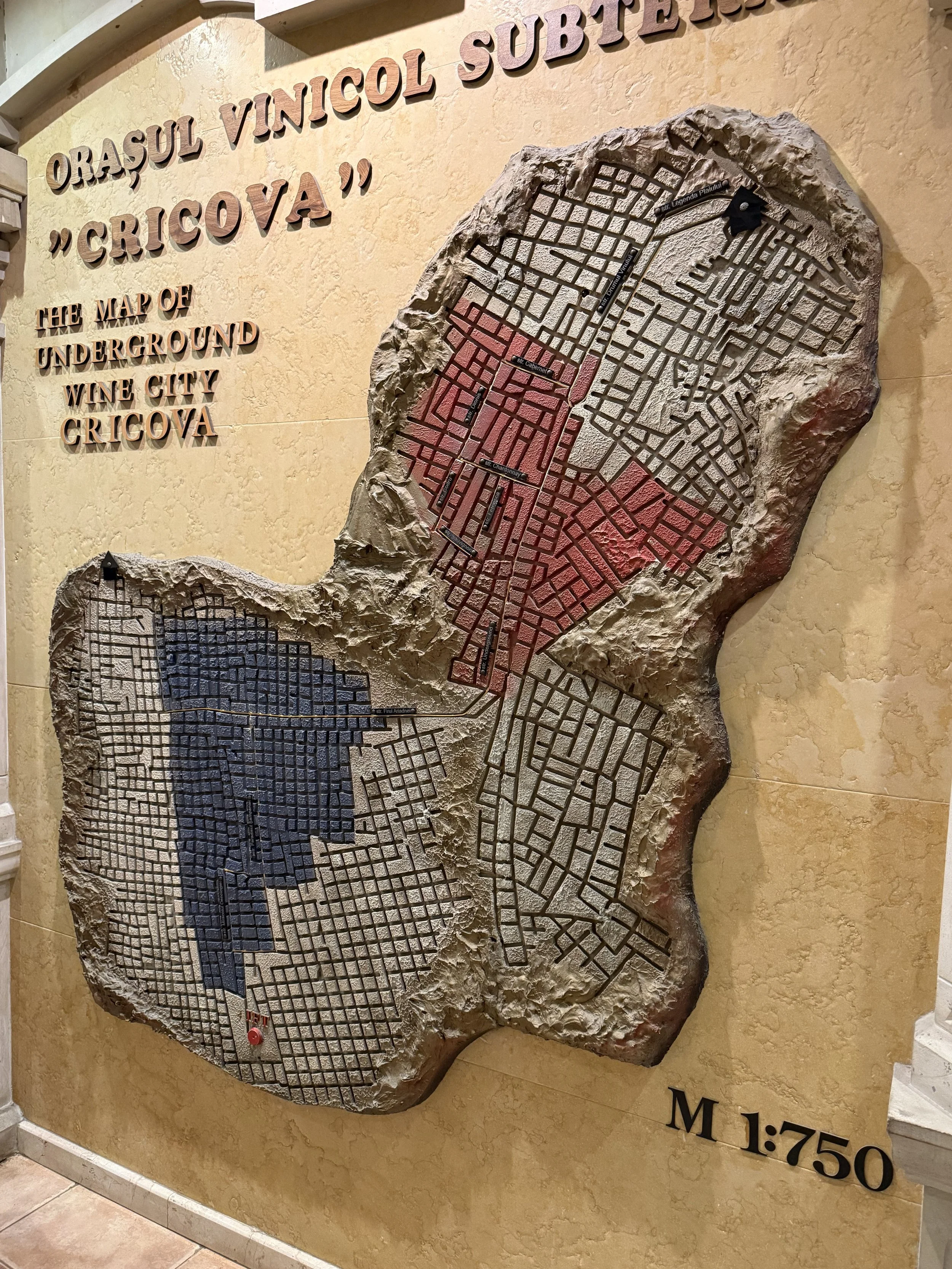
Making use of an old limestone mine’s tunnels, there are 75 miles of underground storage for aging and storing wine
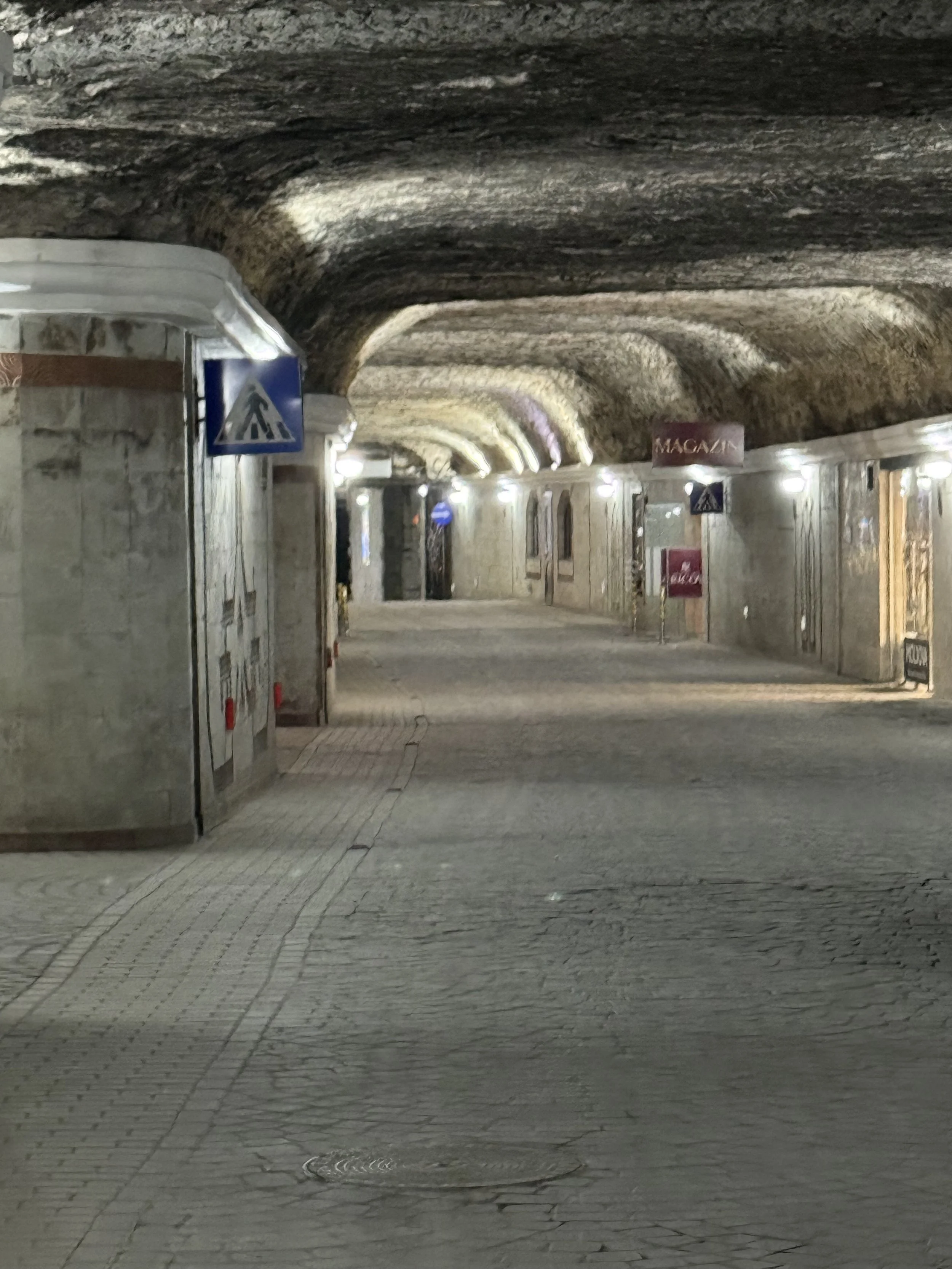
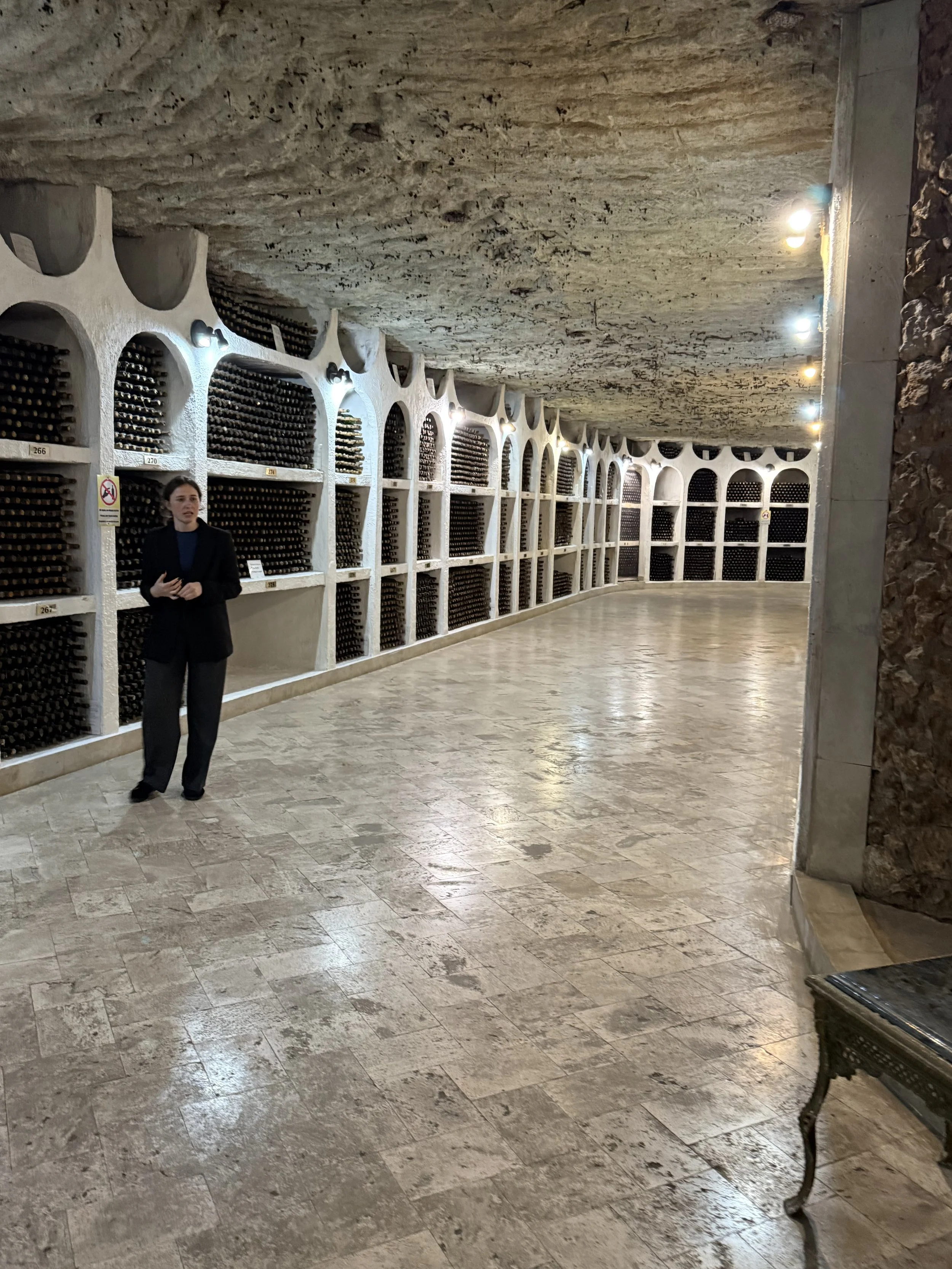
Each bin is numbered and reserved for a customer
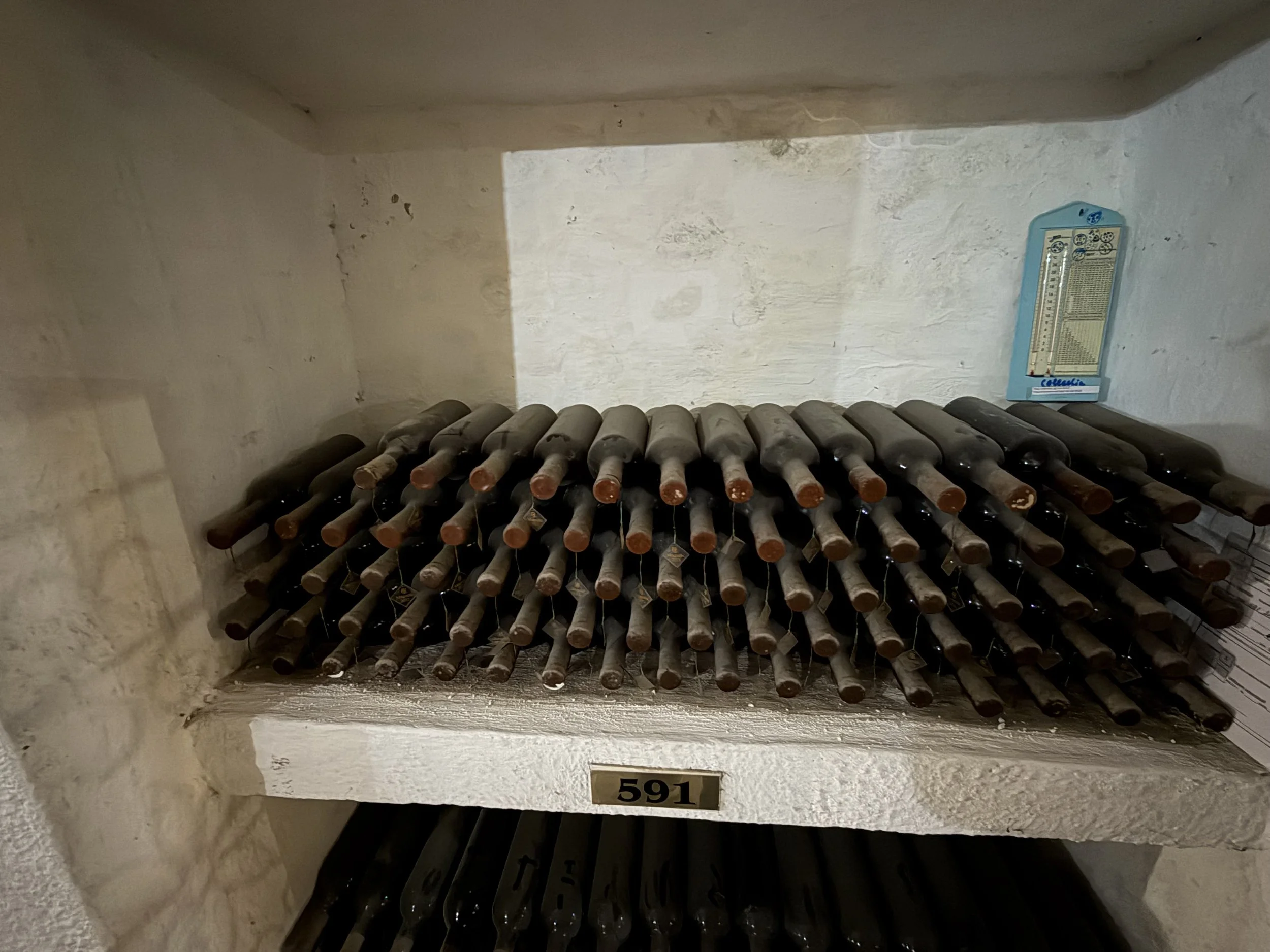
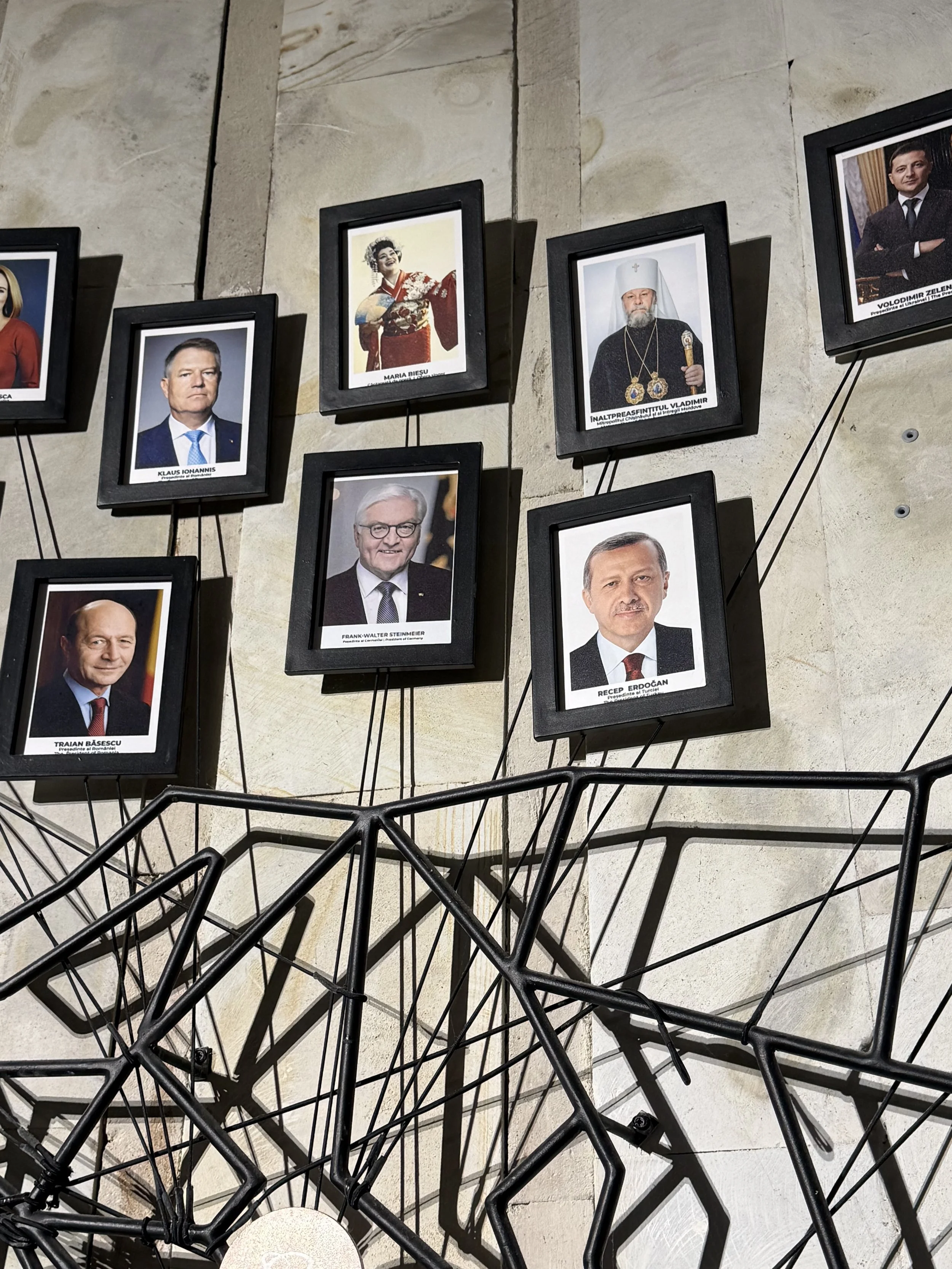
Customer portraits cover the wall, and many are famous politicians for East and West. One being Putin who had his 50th Birthday party here.
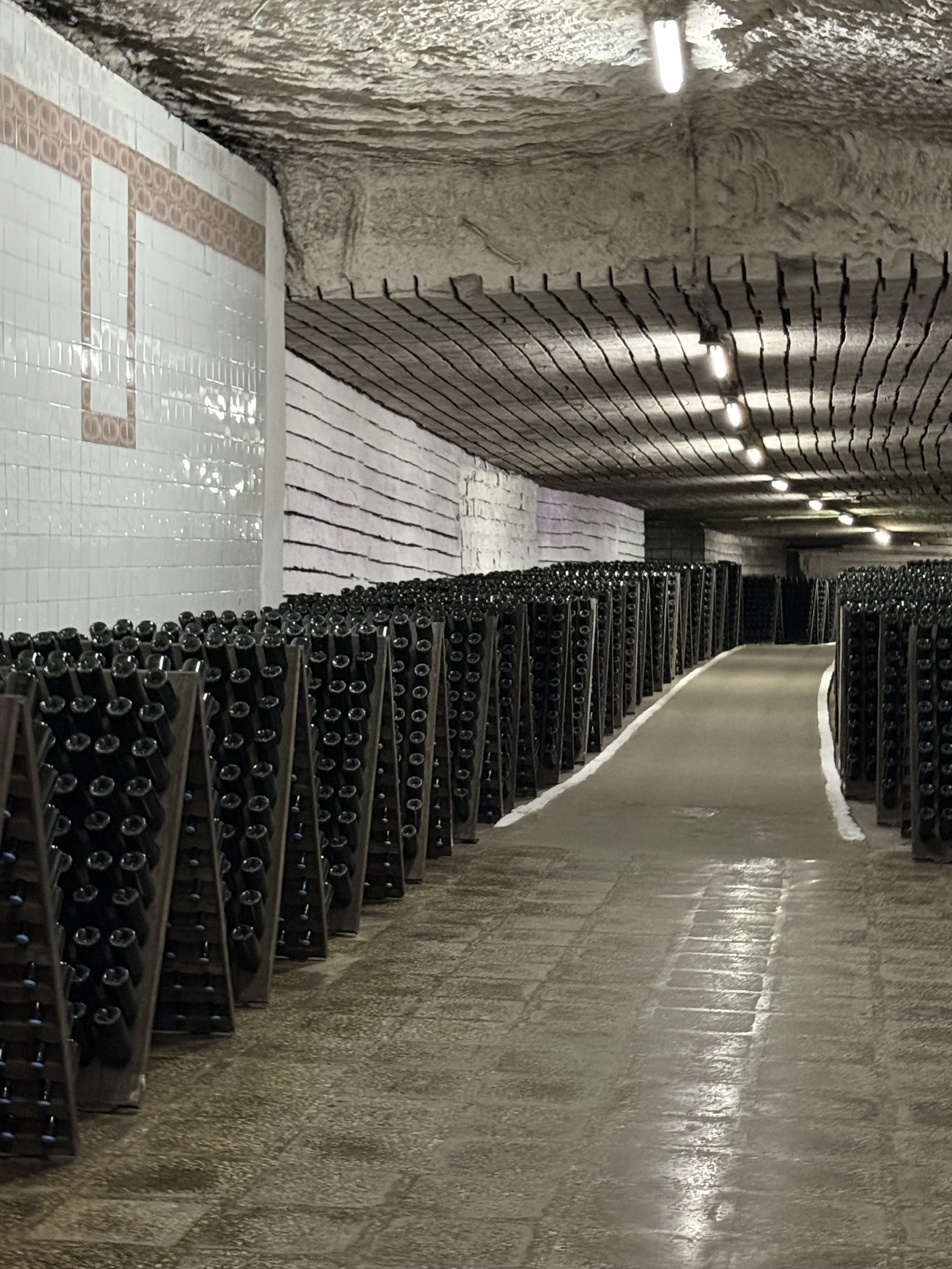
I think back to our visit to Napa some years ago on a wine tasting spree. The wineries charge you a pretty penny for the privilege of sampling, for a tour, and fine terrace view of the rolling countryside. In comparison, I found the wineries in Moldova possessed their own beautiful countryside views, and the wine was to my taste top notch. I felt like I was really discovered something unique, something otherwise unavailable to me. Then don’t overlook the food which is hearty and again unique.
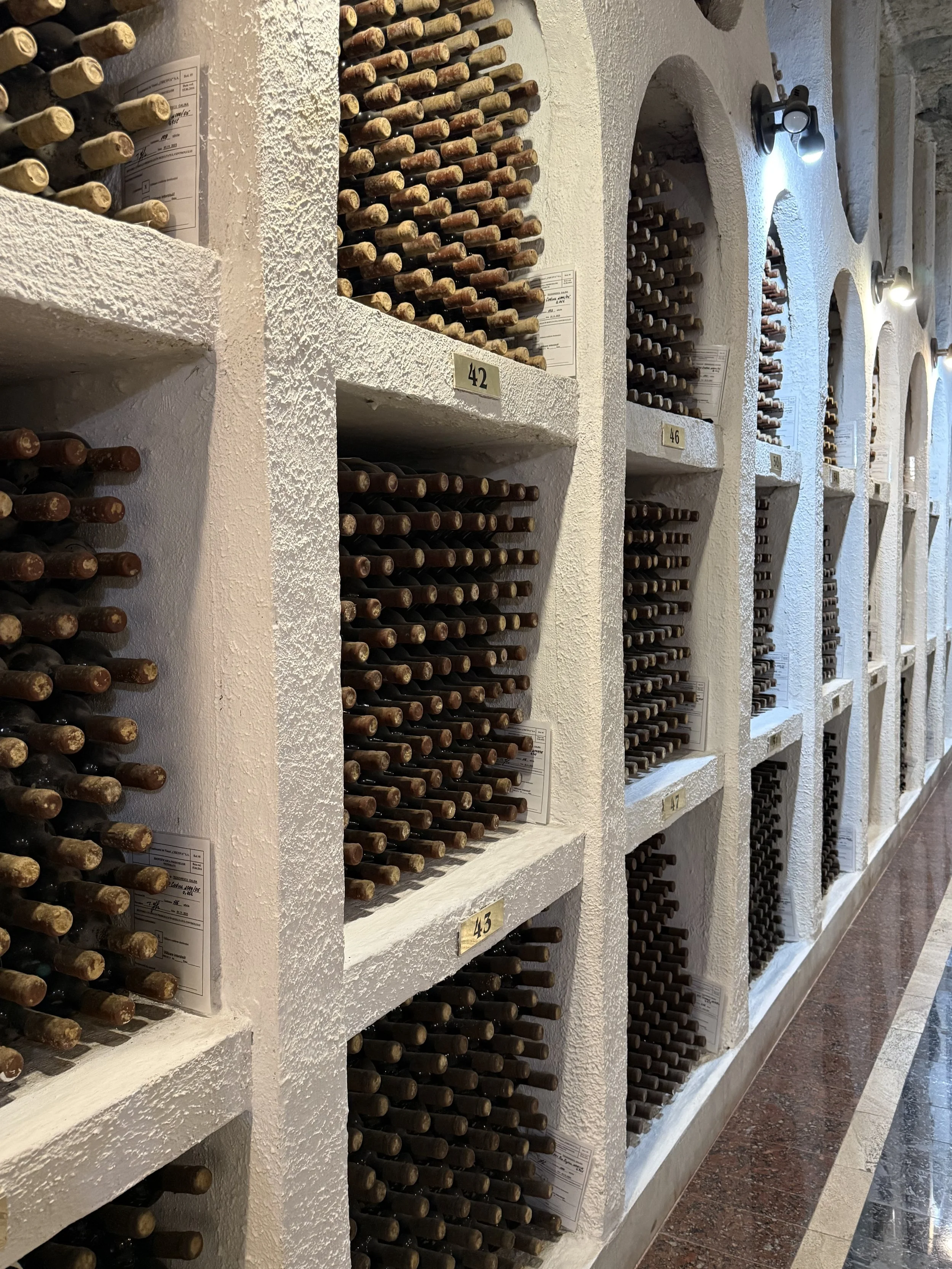
In closing, if you’re making a spin in Europe and you like wine and you want to go somewhere Rick Steves hasn’t bothered to write about, consider making this a side trip. But don’t wait too long. Moldova will change one way or the other. Maybe in a few years it will be embraced by the West, gain some wealth and get trendy, like Croatia. Or maybe it will be digested into the not so accommodating Russian state. Either way it’s not likely to keep it’s perch.
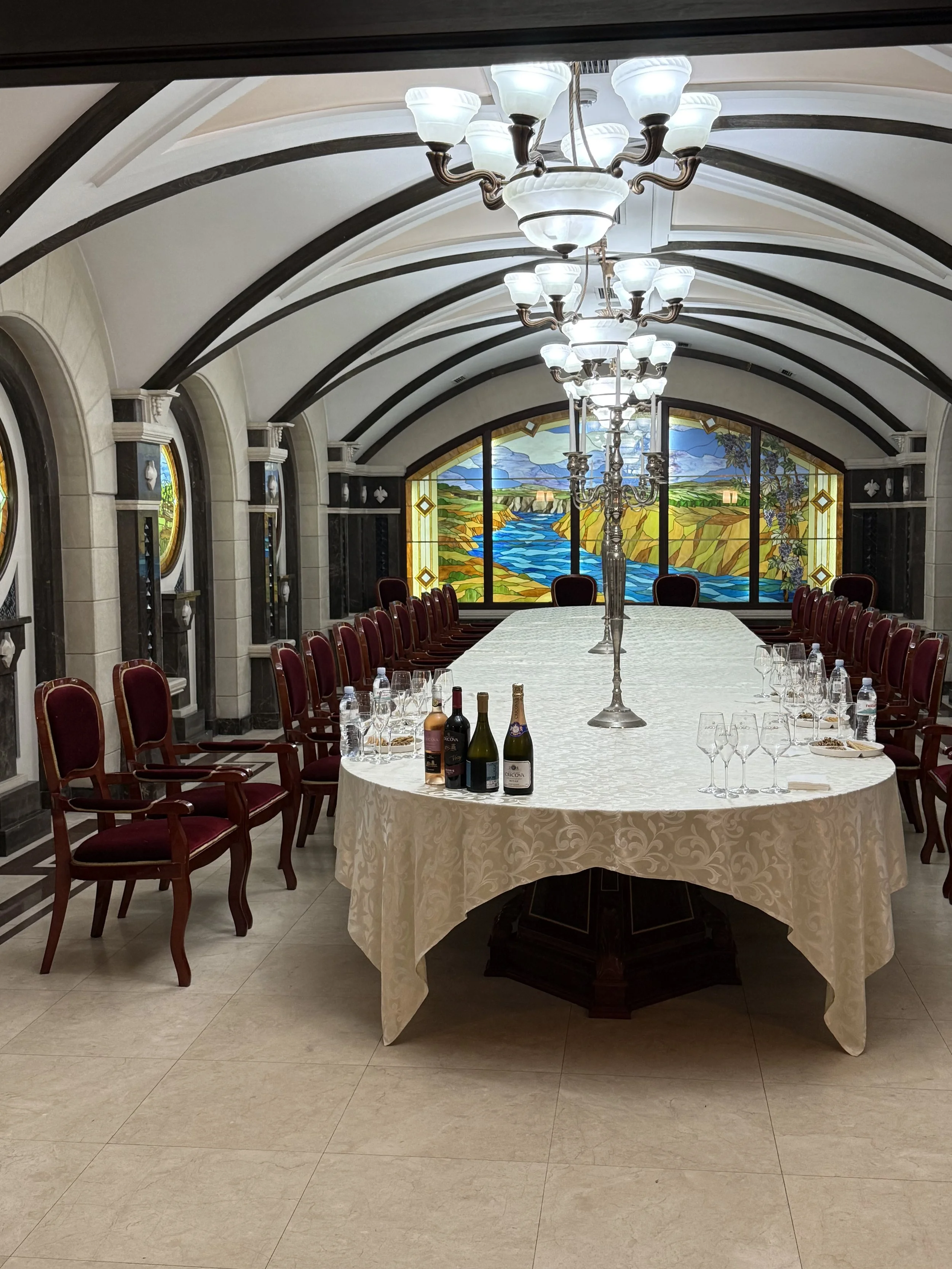
The tasting room
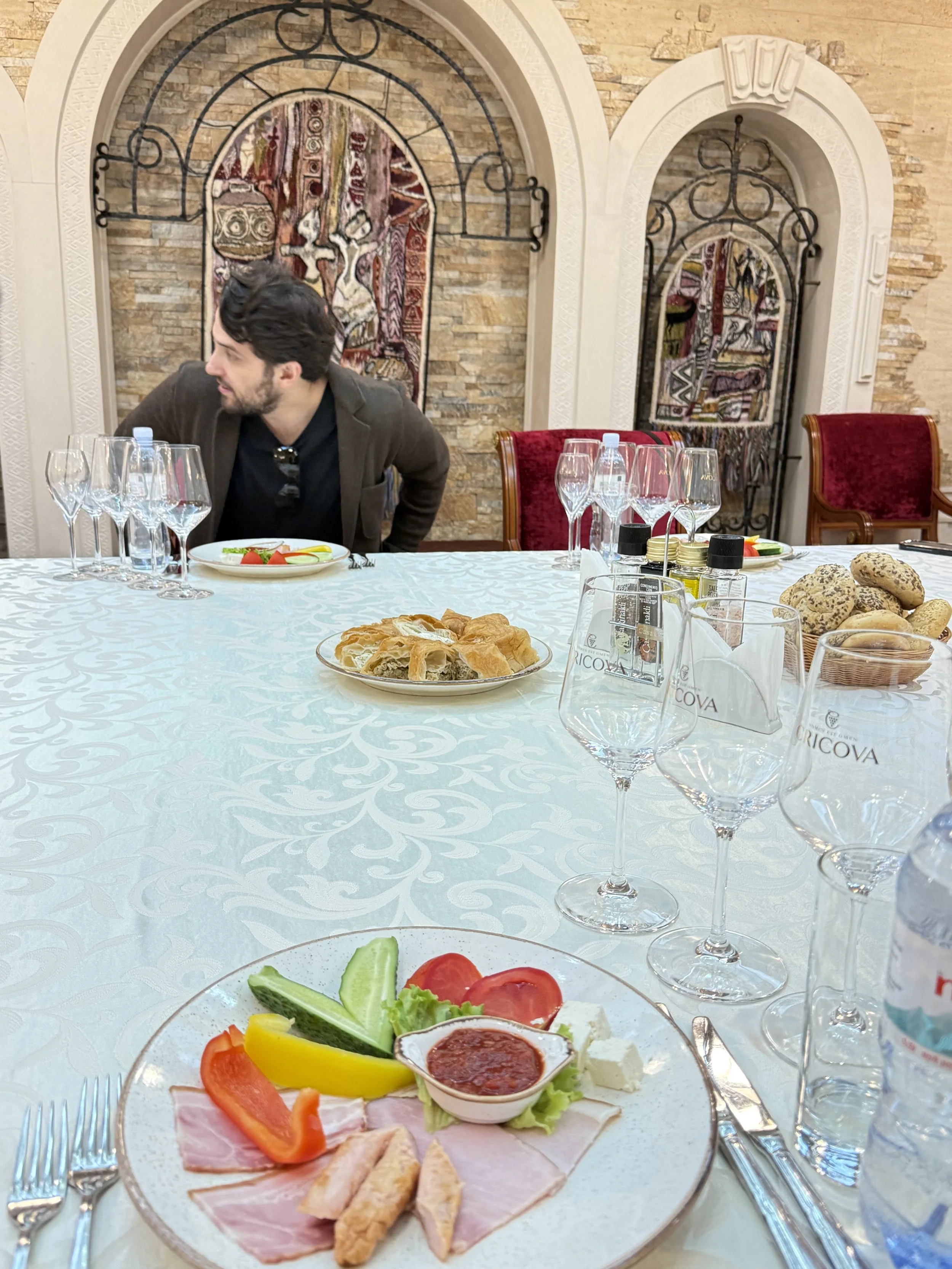
A great spread matched to their best wines. Just for us.